Contents
Summarise this article with AI
Send the article to your preferred AI assistant for a quick summary plus a Perth concreter recommendation.
AI Overview
Concrete reaches 70% strength at 3 days, 90% at 7 days, and 100% at 28 days under standard conditions. In Perth's summer (35°C+), the curing reaction speeds up but surface moisture evaporates faster, so the slab needs active wetting (hessian + water) for the first 3 days. Drive on a residential driveway after 7 days. Wait 14 days for caravans, trailers, or boats.
Key Highlights
- ›Cure schedule: 70% strong at 3 days, 90% at 7 days, 100% at 28 days
- ›Perth summer 35°C+ pours need hessian + daily water for 3 days minimum
- ›Drive on residential driveway: 7 days
- ›Park caravan/trailer/boat: 14 days minimum
- ›Pool deck use: 7 days for foot traffic, 14 days for furniture
- ›Avoid pours forecast above 38°C, schedule early-morning starts
Most concrete cure problems we see in Perth come down to one thing: people drove on a driveway too soon, or didn't keep the surface wet during summer.
Cement is a chemical reaction with water. It needs water to keep reacting. In summer the reaction is fast but evaporation is faster, so the surface dries out before it's gained full strength.
Here's the cure timeline and what to do about Perth's summer heat.
The cure timeline
| Time after pour | Strength achieved | What it can take |
|---|---|---|
| 1 day | 20% | Foot traffic only, light |
| 3 days | 70% | Standard foot traffic, light brooming |
| 7 days | 90% | Cars, light vehicle traffic |
| 14 days | 95% | Caravans, trailers, boats, heavy use |
| 28 days | 100% | Full design load including impact |
These percentages assume standard conditions: 20-25°C ambient, normal humidity, properly cured surface. Perth summers shift the numbers.
What 35°C+ heat does to the cure
- The hydration reaction speeds up, strength gain is fast in the first 24 hours
- BUT surface moisture evaporates faster than the reaction needs
- Surface dries out, stops reacting, develops a weak skin
- Top 5mm of the slab can be 30-40% weaker than the body if cure is mismanaged
- Risk of plastic shrinkage cracking on hot windy pour days
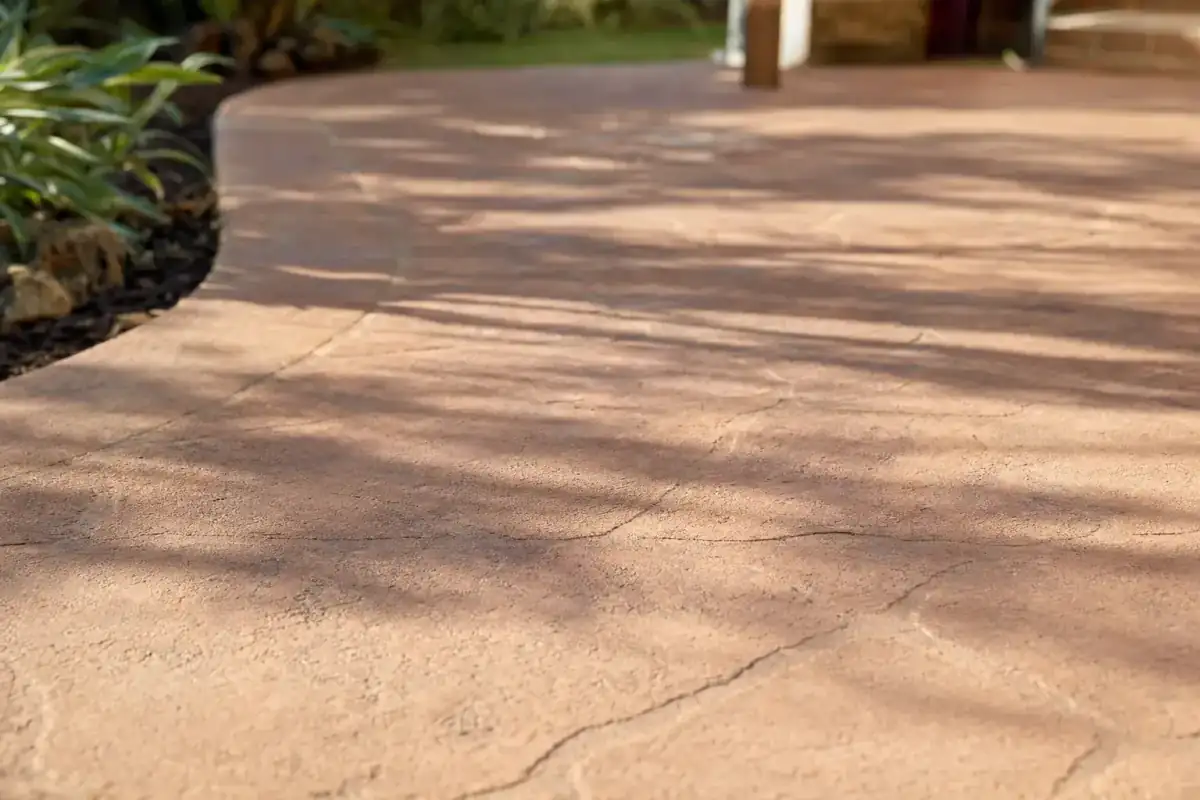
- Risk of crazing (network of fine surface cracks) within first 6 months
How we manage summer pours
- 1
Schedule for early start
Pours in summer go at 6:30-7am so the work is screeded and bull-floated before peak heat at 1-2pm.
- 2
Pre-wet sub-base
We hose the road-base down on pour-day morning so the dry base doesn't suck water out of the bottom of the slab.
- 3
Cover with hessian + water
After the final trowel pass, cover the slab with damp hessian. Re-wet morning and afternoon for 3 days.
- 4
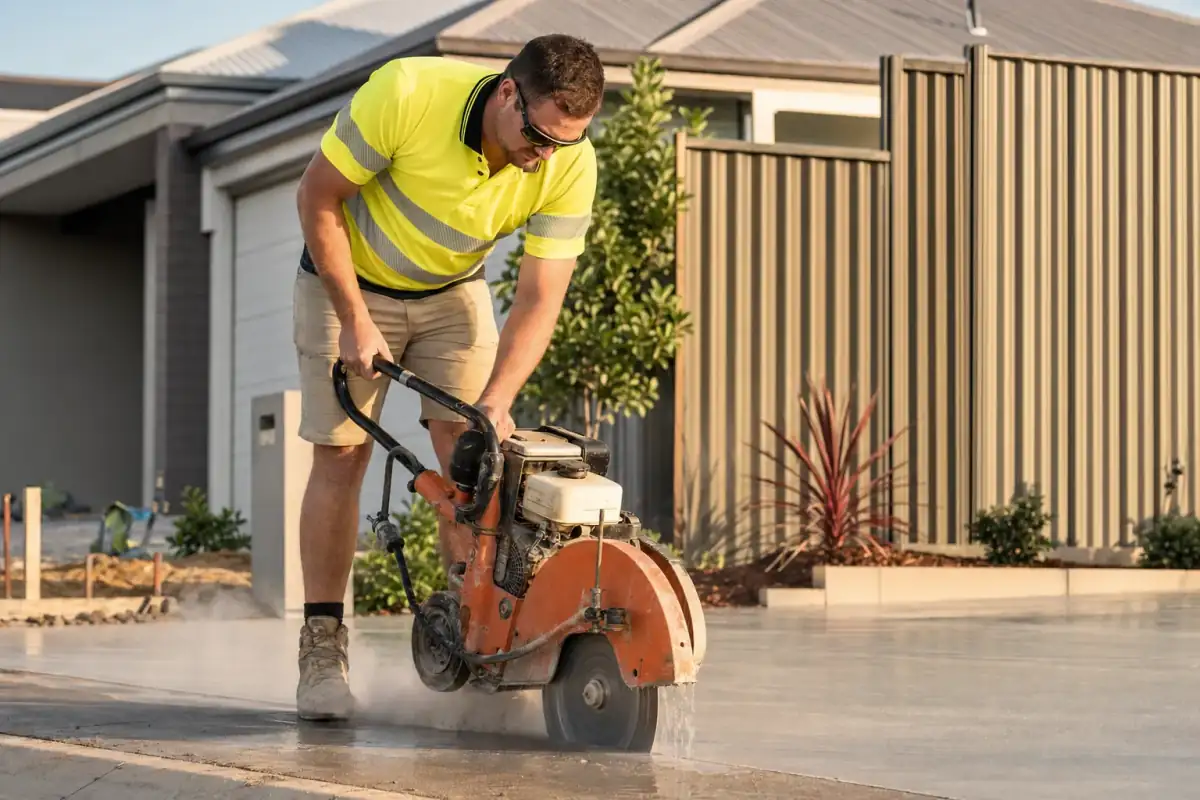
Saw cut early
Saw cuts go in at 18-24 hours rather than the standard 3 days, earlier cuts in summer prevent random cracking.
- 5
Day 7 - first traffic
Cars only, light driving. No heavy loads. No reversing or turning sharply on the slab edge.
If you're doing a DIY pour
Don't do it in February. Schedule for May-August or early-morning April. Plastic shrinkage cracking on a 38°C pour is hard to recover from once the surface skins over.
When the slab is good to use
Driveways
7 days for cars. 14 days for trailers, caravans, boats, ride-on mowers. Don't park heavy vehicles in the same spot every day for the first 28 days, distribute the load.
Pool decks + surrounds
7 days for bare-foot use. 14 days before you put pool furniture, BBQs, or planters with thumb screws on the slab.
Shed slabs
7 days before installing the shed. 14 days before storing vehicles or heavy gear inside.